

Direct Redemptions
Direct Redemptions let a leveraged position redeem its collateral through the asset issuer and repay debt when the proceeds arrive. The position remains recognised as collateral during the redemption period, reducing reliance on secondary-market liquidity to unwind.
The problem: limited instant liquidity
Entering a leveraged position can be straightforward when the asset can be minted instantly. Exiting is often harder: native redemption may take days or weeks, while an immediate sale depends on available secondary liquidity.
- Costly secondary-market exits. Thin DEX liquidity can mean selling at a discount or incurring significant slippage to repay debt.
- Liquidity costs for issuers. Maintaining enough secondary liquidity to support these exits can be expensive.
- Repeated redemption windows. Without additional funds to repay upfront, a borrower may have to withdraw only the collateral the position can spare, redeem it, repay part of the debt, and repeat. Each step can require another redemption window.
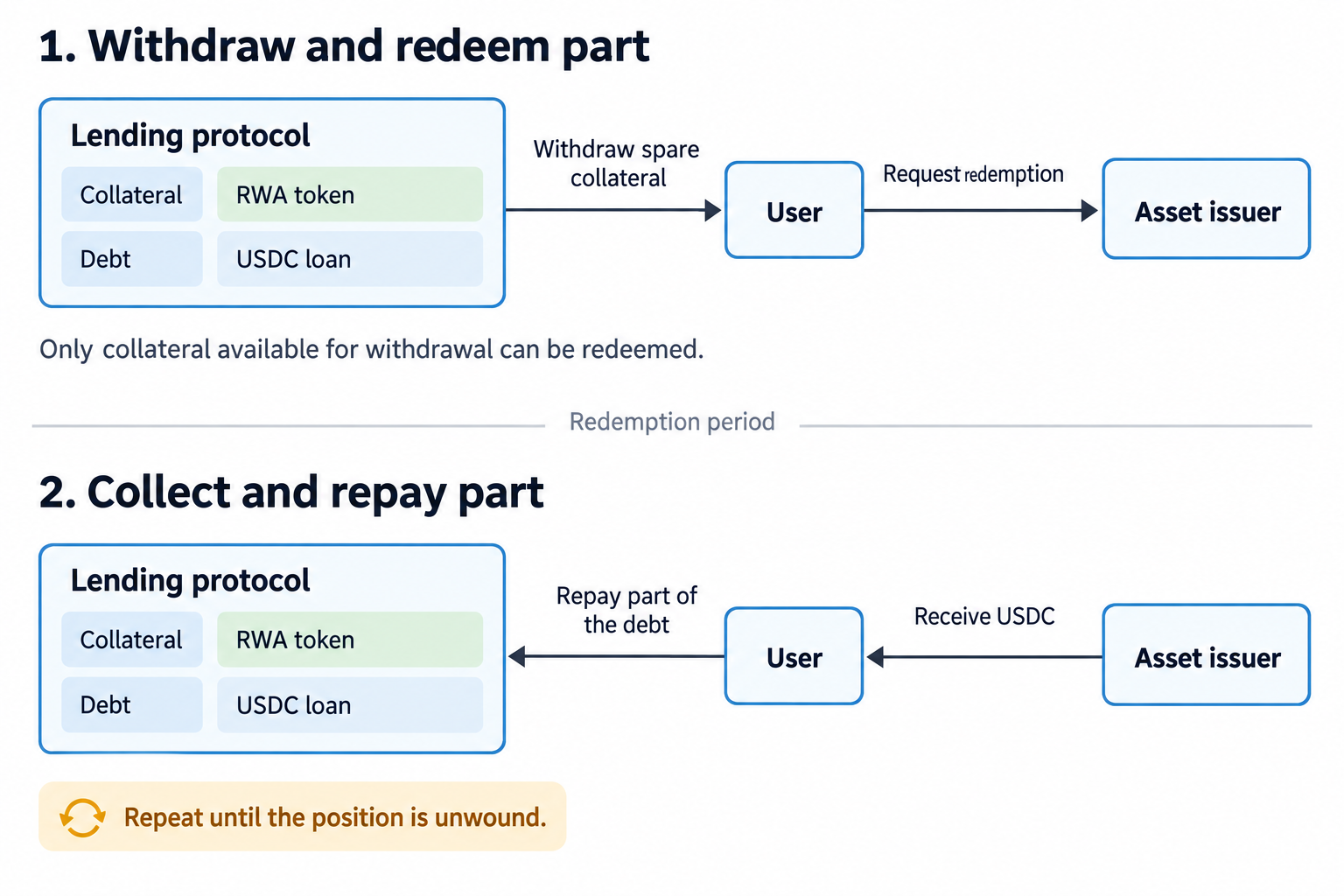
Gearbox's solution
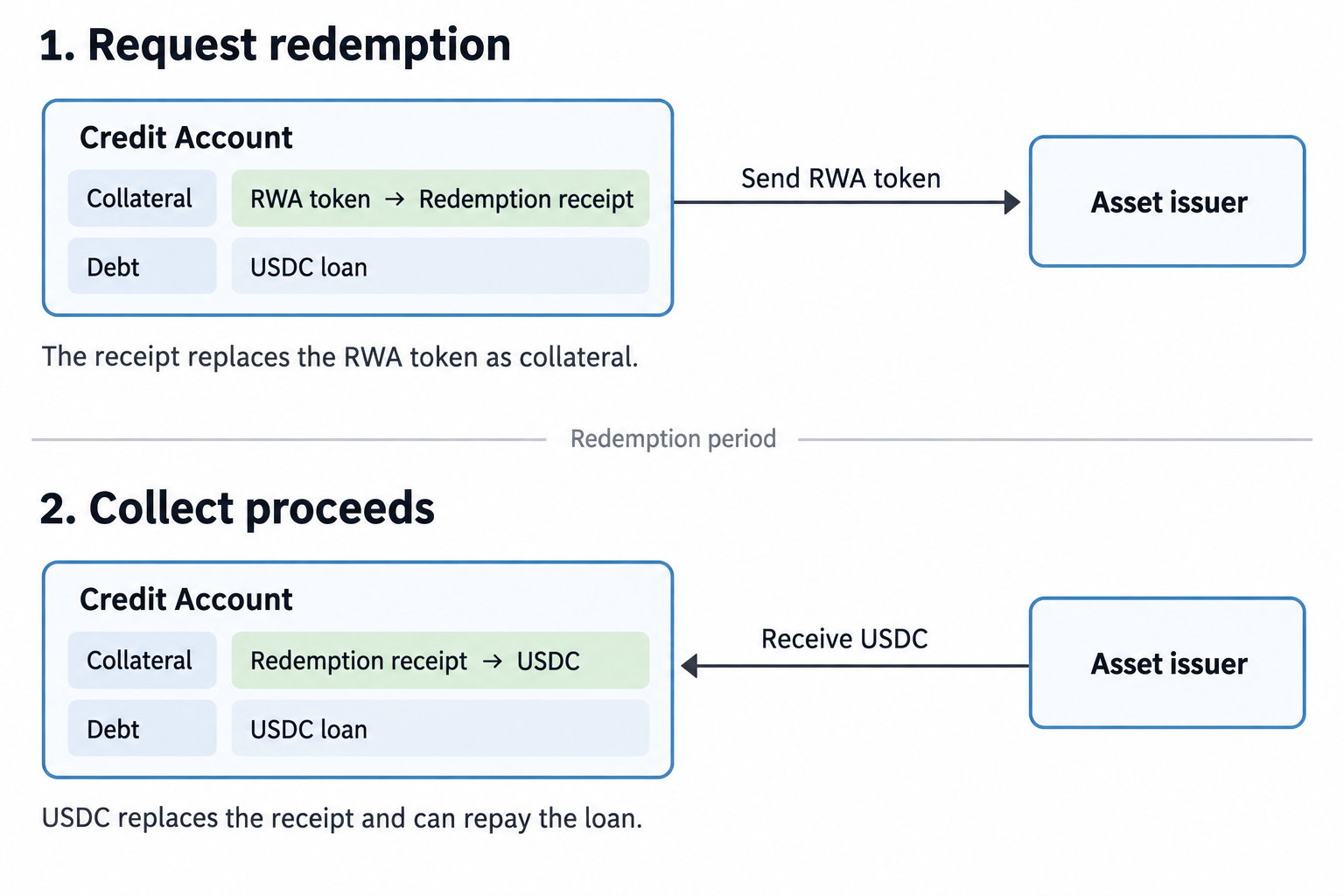
Gearbox integrates directly with supported issuers' redemption contracts and recognises pending redemption claims as collateral. The token leaves the Credit Account, but the asset has not disappeared: the account now owns a claim on the future payout.
This allows the position to enter redemption while its debt remains outstanding.
Benefits for users and issuers:
- Less dependence on DEX liquidity. A borrower can use native redemption instead of selling the collateral on a secondary market.
- One redemption window for the position. The collateral can be submitted together, avoiding repeated withdrawal, redemption, and repayment cycles, subject to issuer limits.
- No separate debt repayment upfront. Redemption proceeds can repay the loan when they arrive.
- Issuer-based settlement. Proceeds follow the issuer's redemption terms rather than the price available for an immediate secondary-market sale.
The issuer's redemption schedule, fees, and capacity still apply. Borrowing interest continues to accrue during the waiting period.
How it works
Gearbox recognises the redemption receipt as collateral
When the RWA token enters redemption, the asset changes form. The account now holds a claim on the issuer's payout. Gearbox recognises that claim as collateral while the debt remains outstanding.
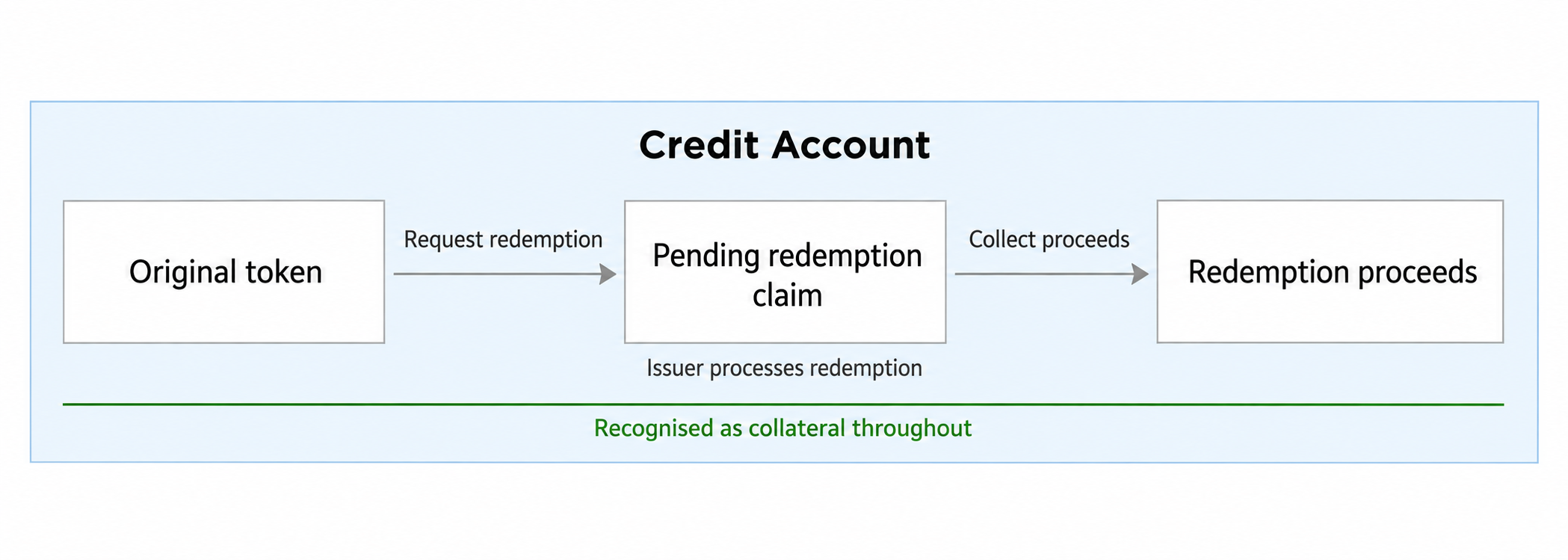
End-to-end flow
See Delayed Redemptions Liquidation for implementation details, or RWA Receivables Financing for MMs/Liquidators for an application to discounted RWA purchases.